
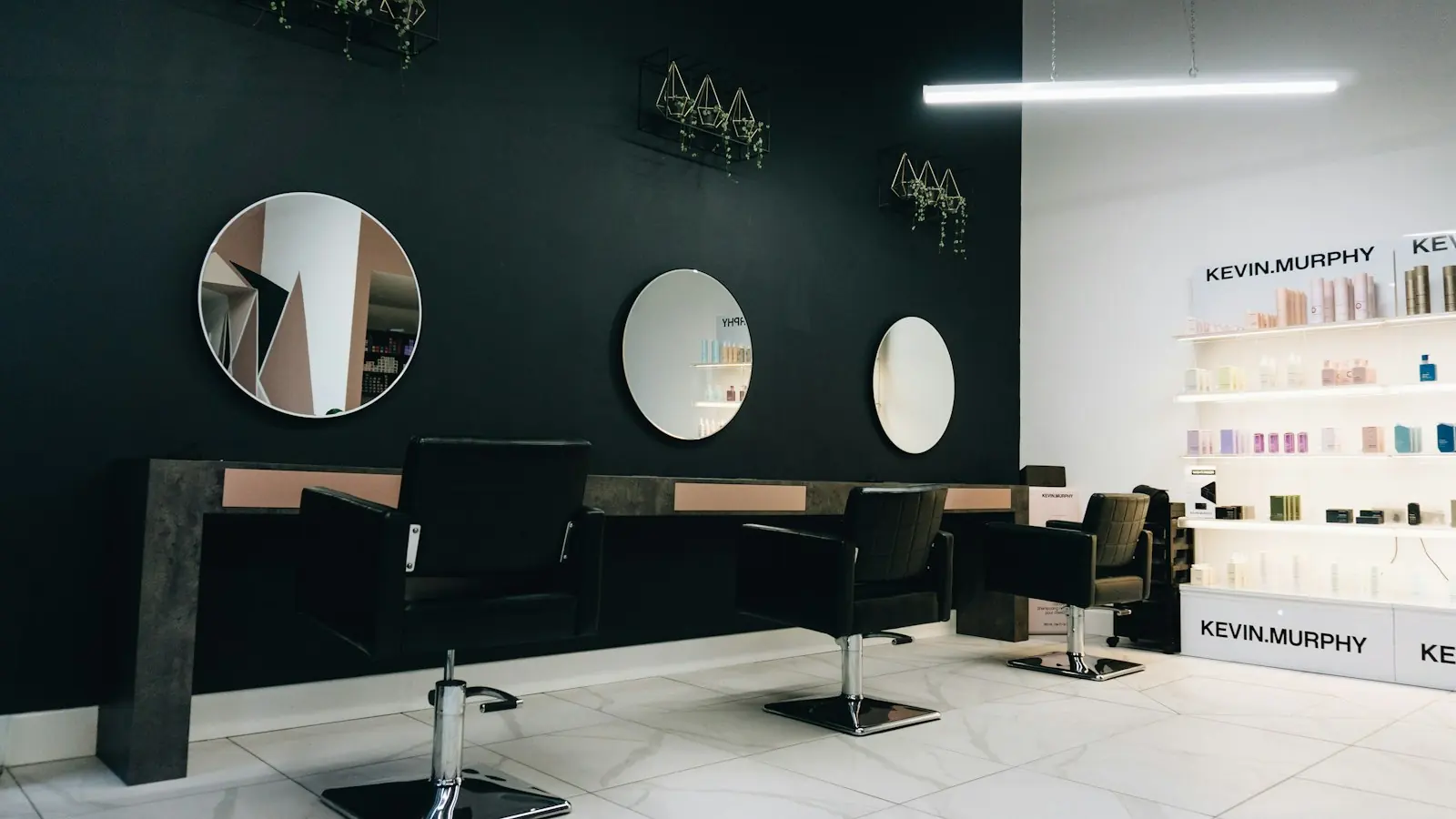
A business plan is not paperwork. It is one argument, made nine ways: that your chairs will be full.
A salon business plan is not paperwork. It is one argument made nine different ways, and the argument is that your chairs will be full.
Everything in the document either supports that or pads it. Most first drafts are ninety percent padding, which is why they get politely declined.
First, know which plan you are writing
There are two, and writing the wrong one wastes a month.
The lender's plan is what you need if you are asking a bank, the SBA, or an investor for money. It is long, formal, and mostly about whether you can repay. The Small Business Administration lays out nine standard sections, and lenders expect to see them in that order because it is the order they read in.
The owner's plan is what you need if you are funding this yourself. It can be one page. Nobody is grading it. Its only job is to make you answer questions now that would otherwise ambush you in month four.
Write the second one even if you need the first. It is where the thinking happens.
The nine sections, in salon terms
1. Executive summary. One page, written last. What the salon is, where it is, who it serves, and why it will work. If a lender reads only this page, it has to carry the whole argument.
2. Company description. The problem you solve for a specific person. Not "we do hair." Something closer to: the only salon within twenty minutes doing corrective colour, in a town where every existing salon is a blow-dry bar. Specific beats broad here, and it is also the part most owners write vaguely.
3. Market analysis. Your town, your competitors, your client. How many salons are already there, what they charge, what they do not offer. Walk in and look at their price lists. This is the section lenders use to decide whether you have actually studied the place or just love the idea.
4. Organization and management. The legal structure, who owns what, and who runs what. If it is you alone, say so and say what you have done before. A licence and ten years behind the chair is a credential, and it belongs here.
5. Services. Your menu, your prices, and the reasoning behind them. Include what you will not do. A salon that says no to one thing reads more credible than one claiming to do everything.
6. Marketing and sales. How strangers will find you and how they become bookings. This is the section that is nearly always weakest, and it is the one that decides whether the rest happens. See below.
7. Funding request. How much, what for, and over what period. Broken down, not a single round number. Lenders read "$85,000" as a guess and "$85,400, itemised" as a plan.
8. Financial projections. Three to five years of income, expenses, and cash flow. This is where plans die. Also below.
9. Appendix. Lease, licences, quotes, floor plan, resume, anything you asserted above and can prove.
The marketing section everyone fumbles
Most salon plans write this section as a list of intentions. We will use social media. We will do a grand opening. We will run promotions.
None of that is a plan, because none of it says how a stranger finds you or what it costs to get her in the chair.
The version that reads as real answers four questions. Where does a new client in your town look for a stylist, and are you there. What is the first thing she sees. What does it cost you to get one new client through the door. And how many of those come back a second time.
That last number is the one that turns a marketing budget into a business. A salon keeping most of its first-timers needs a fraction of the spend of one that does not, and a lender who has financed salons before knows it.
The financial section, honestly
Ignore anyone quoting you a national average for what a salon costs to open. The number depends on your lease, your build, and whether the space was a salon before, and those three swing it more than everything else combined.
What you can do is build the number from your own quotes, in two parts.
What it costs to open. Deposit and first rent, build and plumbing, chairs and stations, backwash units, dryers, initial colour stock, retail stock, software, insurance, licences, signage, and the website. Get real quotes. Then add a contingency, because the build will find something.
What it costs to run, per month. Rent, utilities, insurance, software, card fees, stylist pay, colour and back bar, retail restock, and marketing. That total is your monthly nut, and it is the most important number in the document.
Now the arithmetic a lender is doing while reading, which you should do first.
| Line | Figure |
|---|---|
| Monthly running cost, everything in | $14,000 |
| Average ticket | $95 |
| Services needed to break even | 148 / month |
| Open days per month | 25 |
| Services per day just to cover costs | 6 |
| Chairs | 4 |
| So each chair must average | 1.5 / day |
Illustration only. Substitute your own rent, ticket, and chair count. The method is the point, not these figures.
Six services a day across four chairs sounds easy in a spreadsheet. Then note that this is break-even, so you have paid yourself nothing yet. Whatever you need to live on sits on top of it.
Run the same table at half that volume. If the answer at half volume is that you close in month five, say so in the plan and show what you would do. A lender who sees you have already thought about the bad case trusts the good case more.
What gets a salon plan declined
The projections only go up. Real months do not.
No named competitors. It reads as though you have not visited the street.
Stylists assumed rather than recruited. If your plan needs four stylists on day one, a lender wants to know who they are and whether they have said yes.
No cash buffer. New salons take months to fill, and a plan with no runway is a plan that needs everything to go right immediately.
A marketing line of "social media" with no cost and no target.
The one-page version
Funding it yourself? The SBA calls this a lean plan, and one page will do. Answer nine things in a sentence each.
Who exactly is your client. What you offer her that she cannot get nearby. Why she picks you. Where she finds you. What it costs to open. What it costs each month. What your average ticket is. How many services a day covers the nut. And what you do if you only hit half.
If you can answer all nine in a sentence, you understand the business. If any answer needs a paragraph to sound convincing, that is the part that is not thought through yet.
If you are opening a salon suite
A suite is a smaller version of the same document, and the money section gets simpler and stricter at once.
Simpler, because your fixed costs are mostly one number: the suite rent. Stricter, because there is only one chair and it is yours. There is no second stylist to cover a slow week.
So the break-even math tightens to a single line. Suite rent plus product plus software, divided by your average ticket, is how many clients a month you must see before you earn a dollar. Most stylists moving into a suite have never written that number down, and it is the whole decision.
The other thing a suite plan needs that a salon plan does not: how your existing clients follow you. Naming the number of regulars who will move with you is the difference between a plan and a hope.
The part to get right
Write the money section first, before the mission statement, before the logo, before the name. If the arithmetic works, the rest of the plan is describing something real. If it does not, you have found that out for the price of an afternoon rather than a lease.